information, advice and companionship on the journey

Monday, March 21, 2016

Video of the Week: Dynamic Extended Angle Pose, Version 2

In this video, Baxter teaches you how to practice a more advanced version of Extended Side Angle Pose) Utthita Parsvakonasana), done dynamically. He also shares two different ways to bring your top arm overhead; one of those ways may work better for your shoulder than the other.


Subscribe to Yoga for Healthy Aging by Email � Follow Yoga for Healthy Aging on Facebook � Join this site with Google Friend Connect

Friday, March 18, 2016

How Yoga Helps Your Digestive System

by Baxter and Nina
Dinner Time by Pablo Picasso*
Before we get into how yoga helps your digestive system, let�s review the general factors that impact our digestive health:
  1. Diet
  2. Sleep and rest
  3. Exercise and general activity levels
  4. Stress
  5. Chronic diseases 
  6. Environmental exposure, such as to chemicals
  7. Travel history
  8. Antibiotic exposure
While yoga cannot help with all of these factors, it can help with the first five! So yoga is a particularly powerful way to influence your digestion. And depending on the condition you�re addressing, yoga can provide all five types of treatment for digestive problems, from preventative medicine to curative medicine. 

Preventative Medicine. Practicing yoga for physical, mental, and emotional wellbeing will support your overall digestive health. 

Curative Medicine. Many practitioners report that yoga practiced for digestion has resolved longstanding general digestive problems, such as bloating, cramping, irregularities in elimination, and having a �sensitive stomach.�

Maintenance Therapy. For digestive conditions that are stable and non-life threatening but have a history of recurrences, such as irritable bowel syndrome, practicing yoga to support digestive health helps bring the digestive system back into balance during flares and helps extend periods that are symptom free. 

Recovery and Rehabilitation. Gentle restorative poses, breath practices, meditation, and guided relaxation can help shorten recovery times for digestive conditions such as post-gastrointestinal surgery and after a flare of early stage ulcerative colitis or Crohn�s disease.

Supportive or Palliative Therapy. Practicing yoga to foster digestive health can help support healing for a wide range of problems and illnesses, including:
  • sensitive digestive system 
  • bloating 
  • chronic diarrhea
  • chronic constipation 
  • irritable bowel syndrome (IBS)
  • celiac disease 
  • reflux (GERD), general heartburn
  • peptic and duodenal ulcers 
  • inflammatory bowel disorders (Crohn�s disease and ulcerative colitis)
For digestive conditions that are incurable and are progressing, such as Crohn�s disease or advanced gastrointestinal cancers, restorative or very gentle asana practices combined with breath practices, meditation, and guided relaxation can help to relieve or reduce pain, improve sleep and appetite, and lower anxiety and depression. 

Yoga can help support your digestive system in the following ways:

Stress Management. One of the global benefits yoga has on digestion has to do with yoga�s effect on our nervous systems. Not surprisingly, our digestive systems work much more efficiently while we are in Rest and Digest mode. So being able to use yoga�s stress management tools to switch from Fight or Flight mode to Rest and Digest mode and to help us remain in that state, allows your digestive system to function optimally overall. Now, digestion does not cease when we in a state of stress, but chronic stress can lead to imbalances in our digestive system, including:
  • decreased peristalsis (movement of food through the digestive tract) and digestion in the small intestines
  • halted absorption of food from gut 
  • build up of stomach acidity, leading to indigestion and heartburn
Yoga�s stress management tools can help you turn these problems around. Stress management tools may also play a role in maintaining healthy gut bacteria. The community of microorganisms living in our large intestines and elsewhere in our digestive system make up our microbiome. Our microbiome has a variety of functions, including the metabolism of certain nutrients in our food, the regulation of our immune system, and modulating various behaviors such as hunger, satiety, and sleep. Maintaining a large variety of the organisms in our microbiome is important for the health of our digestive and immune systems as well as for the other systems that interact or communicate with our digestive system, such as the central nervous system.

Recent research has shown that chronic stress can actually have a negative effect on the health of your microbiome, by reducing the variety of the microrganisms living in it as well as shifting it to bacterial populations that may have long-term negative health consequences. So using yoga to manage your stress levels will help support the health of your microbiome, providing benefits for the other systems of your body as well.

Asanas. In general, practicing yoga asana for exercise is beneficial for your digestive system as it supports good circulation to the digestive organs, strengthens the muscular supports around the digestive organs, and stimulates good elimination. 

Static poses that strengthen and stretch the abdominal area help tone the abdominal muscles that house and support the majority of the organs of digestion, which helps contain your digestive system safely in your torso, and may assist in movement of material through the system. Dynamic poses that fold, stretch and twist the abdominal area can improve blood and lymph circulation, and create a squeeze and release affect on your organs, which may support improved functioning and stimulate good elimination.

However, there are some conditions for which using asana for exercise may not a good idea, such as severe cases of diarrhea or constipation, or for someone with an acute bout of pain related to their digestive disorders. In such cases, we recommended turning to other yoga tools, including stress management and relaxation. 

Besides using asanas for exercise, you can use restorative poses to shift into the Rest and Digest state. Restorative postures where your chest is lifted and your belly is very relaxed, such as Reclined Cobbler�s pose, can be particularly effective.

Sleep. Using yoga to improve the quality of your sleep will benefit your digestive system as a sound night�s sleep provides a prolonged rest to your entire system, during which you spend time in the Rest and Digest state. See 5 Tips for Better Sleep for recommendations.

Healthy Eating. What we put in our mouths can have a direct effect on our digestion. Some examples of unhealthy eating includes:
  • Overeating, which leads to bloating, cramping, discomfort.
  • Drinking excessive amounts of alcohol, which contributes to ulcers, pancreatitis, and liver disease. 
  • Eating foods that we have an allergy or sensitivity to, such as dairy if you are lactose intolerant or gluten if you have celiac disease.
  • Eating fatty foods that can aggravate the gall bladder, which is part of the digestive system.
  • Eating acidic foods if they worsen conditions such as reflux or hiatal hernia or healing ulcers.
Reducing Chronic Stress. Chronic stress cannot only cause digestive problems, but the cortisol that is released can cause overeating and weight gain by stimulating your appetite. So using your yoga practice to reduce your stress levels and reduce cortisol levels is one of the most important things you can do move toward healthy eating (see Yoga, Stress and Weight Management).

Mindfulness. Many poor eating habits are just that�habits! Practicing yoga asana mindfully and meditating will help you tune into your body, and not to ignore it. And as you tune into your body, you may learn about foods you are currently eating that are compromising your health or notice poor eating habits, such as eating beyond satiety (feeling satisfied). Cultivating mindfulness can teach you to recognize:
  • which foods are good for you and which are not (whether that means junk food or food to which you are allergic or intolerant) 
  • when you are full and don�t need to eat more
  • when you are thirsty instead of hungry
  • when you are eating for stress, not for hunger
Mindfulness will also help you start to recognize habitual thoughts that are getting in the way of healthy eating. You can then work on changing your perspective (see Got Mindfulness? and Meditation and Healthy Eating).

Will Power. Once you�ve identified your habits or have decide to eliminate or cut back certain foods, it takes will power to change! According the Dr. Kelly McGonigal, being in a state of stress can increase impulsive behavior and decrease will power. So practicing stress management as we describe above will help with your will power (see Healthy Eating, Stress and Self Control). However, you can also use a meditation practice to intentionally strengthen your will power. Meditation teaches you to return to your object of meditation (your focus) and tune out distractions (temptations). And beyond that, research has demonstrated that is little as 3 hours of accumulated meditation alone can improve willpower. 

�Neuroscientists have discovered that when you ask the brain to meditate, it gets better not just at meditating, but at a wide range of self-control skills, including attention, focus, stress management, impulse control, and self awareness. People who meditate regularly aren�t just better at these things. Over time, their brains become finely tuned willpower machines. Regular meditators have more gray matter in the prefrontal cortex, as well as regions of the brain that support self-awareness." �Dr. Kelly McGonigal

We hope this information helps you understand why yoga is such a powerful tool for preventing and dealing with digestive problems. Coming soon we'll have a post that includes specific techniques for maintaining the health of your digestive system.

Subscribe to Yoga for Healthy Aging by Email � Follow Yoga for Healthy Aging on Facebook � Join this site with Google Friend Connect

Thursday, March 17, 2016

Your Brain is More Than That Thing in Your Skull

by Baxter and Nina
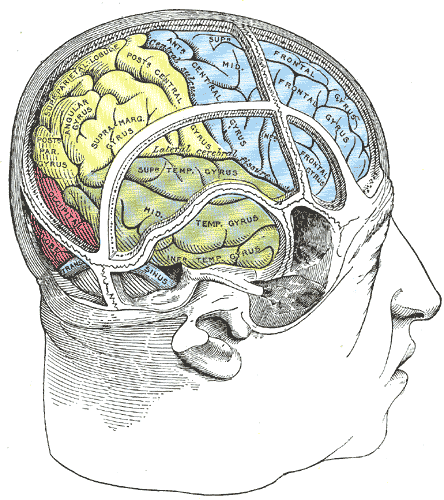
Your brain is an organ of the body just like your heart or liver. Although the organ itself resides in the skull, it is not isolated from the rest of your body as you might tend to think. Through an network of nerves, it is essentially connected to all the other organs, structures, and systems of your body. 

So, what we do to keep our other organs and systems healthy has an effect on our brains and we shouldn�t be surprised by that. But we are surprised! We tend to think of keeping the brain healthy just by feeding it new information and experiences, such as by learning new languages, playing music, and doing crossword puzzles. But just plain physical exercise could be as or more important than mental exercise. In fact, a recent study that looked at both leg strength and cognitive ability in twins as they aged showed that those who maintained better leg strength as a result of exercising had better memory and other cognitive functions than their non-exercising twin. 

But targeting cardiovascular health with your practice could be especially helpful for brain health. As our colleague Ram says, �What is good for the heart is good for the brain.� And just as a healthy diet is important for the physical health of our heart and other organs, the same is true for our brains.

Learning a bit about the basic components that make up �the brain� will help you understand how your yoga practice can have a stronger influence over the health of your brain than you might first think:

Brain. The organ we call the brain is housed securely within your skull, and extends down your toward your spinal cord in the form of the brain stem. The part of your brain located in your skull has different areas that are associated with different functions. For example, the deeper parts of the brain deal with background functions, such as digestion, blood pressure, hormonal balance, to name just a few and the more superficial parts are involved in activities associated with our conscious thoughts and actions.

Throughout our lives, our brains can change, heal, and grow though a process called �neuroplasticity�. In response to stimulation and learning, the brain actively grows and rewires itself. With your yoga practice, learning new poses and practices, not to mention delving into yoga philosophy, will directly stimulate your brain. Other factors that influence your brain�s plasticity include lifestyle, environment, and exercise, so using yoga for exercise and stress management as well as to support healthy choices about lifestyle and environment will benefit brain plasticity.

Your brain is also strongly affected by your physical condition. For example, chronic stress can affect how your brain functions day to day, such as making your thinking foggy, and, over longer periods of time, even change the structure of your brain for the worse, such as shrinking certain areas. Your circulatory system influences your brain because a sudden change in blood flow could cause dizziness or fainting, or in extreme cases, a stroke, which could result in permanent damage or even death.

Sleep also has a strong effect of healthy brain function because too little sleep leaves us drowsy and unable to concentrate in the short run, and leads to impaired memory and physical performance in the long run. And scientists now believe that sleep helps to clear out toxins from the brain as well as from the body, which is vital for the long-term health of your brain.

In general, using yoga for exercise, stress management, maintaining circulatory system health, improving sleep, supporting a healthy diet, will all contribute to the health of your brain, as does participating in your local yoga community.

Blood-Brain Barrier. The brain and spinal cord are surrounded by three layers of connective tissue, which create the blood-brain barrier. This barrier protects your brain, making it very hard for infections to get to the brain and preventing the fluid around the brain from seeping out. However, blood vessels still directly penetrate and surround the entire brain, so your circulatory system can deliver fuel to and remove waste from it moment by moment. You can have a positive influence on the moment-by-moment supply to your brain with your yoga practice by supporting good digestion and circulation, and lowering your stress levels. 

Nervous System. Your brain communicates with your entire body through your central and peripheral nervous systems. The central nervous system consists of the brain and the spinal cord. The peripheral nervous system consists of the large and small nerves that connect your spinal cord to all the parts of the rest of your body. Together, they all work together to make up the entire nervous system. 

Because the nerves from your peripheral nervous system plug into just about every structure in your body, they create a two-way communication system between the brain and body. Due to this two-way communication, we can influence the function and physiology of the brain with our yoga practices. For example, when we use our breath, meditation, or asana practice to trigger the Relaxation Response, we not only create a mental state of calm but we also expand our thought-behavior repertoire to include a wider range of possibilities than those we have in stress mode (see Stress and Your Thought-Behavior Repertoire).

Gut. Although your brain has two-way communication with all the parts of your body, it may not surprise you to learn that your brain has a special two-way relationship with your gut. The human gut has a semi-independent nervous system, called the enteric nervous system, which derived from the same embryonic neural crest cells that give rise to the brain. Your gut is in constant communication with your brain, primarily through your central and peripheral nervous systems. But your gut also communicates with your brain through neuropeptides to regulate complex feeding behavior and pain perception. And there is new evidence that even your gut bacteria communicates with and coordinates signals between the gut and the brain. So keeping your gut happy and healthy through a well-balanced asana practice, stress management, and a healthy diet will benefit your brain health as well (see The Digestion System and Yoga).

Circulatory System. As mentioned above, the circulatory system supplies fuel to and removes waste from our brain each moment of our lives to keep the brain healthy and operating well. If the circulatory becomes compromised with conditions such as plaque build-up in the large blood vessels leading the brain, or if it has weak spots that could rupture and bleed, then the brain is at risk for strokes. Using yoga to keep your circulatory system healthy may lower your chances of developing cardiovascular disease (see Techniques for Improving Cardiovascular and Heart Health). And if a stroke does occur, yoga can be useful in your recovery. 

We hope this gives you a good appreciation of the ways in which your brain is closely tied to the other systems of your body, and a better understanding of how yoga can help you foster brain health. For specific tips about how to do this, see 6 Ways to Foster Brain Health with Yoga

Subscribe to Yoga for Healthy Aging by Email � Follow Yoga for Healthy Aging on Facebook � Join this site with Google Friend Connect

Wednesday, March 16, 2016

The Importance of Good Sleep: Interrupted vs. Abbreviated Sleep

by Ram
Self Portrait Between the Clock and the Bed
by Edvard Munch
Ayurveda declares sleep as one of the three pillars that endow the body with strength, healthy complexion, and healthy growth that can continue until the full span of life, provided that the individual does not indulge in activities that are detrimental to health. The Ayurvedic texts also describe the maladies that can result from improper sleep, including but not limited to misery, emaciation, weakness, stupor, fatigue, body aches and fever. 

Proper sleep and rest is essential for the well-being of any individual as the body utilizes the sleep time to repair itself of any damage sustained during the waking hours. Good sleep also helps to maintain a healthy immune system and balance our appetites. A good night�s sleep enhances the same positive feelings and states of being that we achieve through our yoga practice. On the other hand, poor quality sleep:
  1. results in failure to sustain and preserve new memory
  2. triggers obesity and other metabolic disturbances
  3. contributes to accidents, falls and traffic mishaps
  4. triggers emotional disturbances
  5. lowers immunity, making the individual more susceptible to degenerative diseases or infections
Several recent studies have shown that lack of sleep or a discontinuous sleep during the night may be deleterious for the brain, and may trigger dementia and increase the risk of stroke symptoms. Unfortunately, we�re a world of unhealthy sleepers. If you compare the world statistics of insomnia and poor quality sleep, it is interesting to note that the numbers are nearly similar throughout the world. Within the USA, more than 30% of the population suffers from insomnia, with more than half of Americans failing to have sound sleep due to tension, work, stress, and/or emotional upheaval. Between 40% and 60% of people over the age of 60 suffer from insomnia, with women up to twice more likely to suffer from insomnia than men. Nearly 10 million people in the U.S. use prescription sleep aids. Thus, the type of sleep and how we are affected by it is of great interest to sleep researchers. 

In a recent study The Effects of Sleep Continuity Disruption on Positive Mood and Sleep Architecture in Healthy Adults., researchers sought to find out what�s the worst kind of sleep that would trigger poor health: the kind where you go to bed at the normal time but are constantly up every few hours (interrupted sleep), or the kind where you go to bed very late in the night and get a few hours of uninterrupted sleep (abbreviated sleep). In my personal opinion, while both kinds of sleep are unhealthy to the body and mind, people who wake up several times in the night, resulting in what is termed as interrupted sleep�even if they're in bed for eight hours�are more unhealthy than people who sleep for very few hours of sleep that is uninterrupted sleep. 

The study was conducted on a group of 62 healthy men and women who did not have any issues with sleep and were all good sleepers. The participants spent three days and nights in a sleep lab, with the researchers measuring and analyzing their sleep stages (light to deep slumber) with regard to how much of each stage of sleep each volunteer got every night. The participants were randomly divided into three groups. The first group of 21 participants was woken up several times during the night (interrupted sleep), the second group of 17 was asked to go to sleep very late in the night but their sleep was not interrupted (abbreviated sleep), and the third group of 24 serving as the control went to sleep early and was allowed to sleep uninterruptedly through the night. Participants answered questions about their moods (positive and negative) each evening before dozing off. The researchers also looked at the brain patterns of the individuals through a test called polysomnography. 

When the researchers compared the mood of all three groups, the first two groups showed a decline in positive mood after the first night. But on the next two nights, the interrupted sleepers continued to report significant decline in positive moods while the abbreviated sleepers did not report any further drop�their mood stayed at about the same level they had reported after the first night. The declining trend in positive mood in the interrupted sleep group occurred regardless of what the participants reported on the negative mood scale. Thus, a disrupted sleep seems to have a stronger effect on dampening positive moods than it does on increasing negative emotions. 

When the researchers looked at the brain patterns of the sleep groups, they found that the interrupted sleepers showed significantly less �slow wave sleep� (slow wave sleep aka deep sleep is normally associated with feeling rested and rejuvenated), than the other two groups of sleepers that had slept continuously. The significant drop in the slow wave sleep was associated with the striking drop in positive moods, having implications for how everything from stress to depression can affect both sleep and mood. The most important question that is not yet answered by the study is whether interrupted sleep triggers faulty mood behavior or whether carrying negative moods to the bed triggered interrupted sleep. Whatever may be the initiator, it appears that losing slow wave sleep impairs the ability to recover or stabilize positive emotions. The researchers strongly advise that we need to pay attention not just to the quantity or quality of sleep, or the quantity or quality of mood/emotions, but to the combination of both sleep and moods. 

Living in a hypercompetitive and stressful world with all the demands of work and family obligations, we need to lessen the negative impact on our lives of these demands at least by getting good quality, uninterrupted sleep. In addition to supporting the Ayurvedic concept of sleep being one of the pillars of life, this study appears to offer a reasonable explanation of why this is true.

We have highlighted the importance of sleep through various articles in this blog (see Sleep: A Pillar of Life) and also provided several tips on practices that will help you fall asleep more quickly and sleep more deeply (see 5 Tips for Better Sleep, Day to Night: Yoga for Better Sleep, and Proof that Meditation Helps Improve Sleep). I hope after reading this article you will appreciate the importance of good sleep and, if needed, will follow some of our recommendations for achieving it. Remember, good sleep is essential for your health and wellbeing, and if you are experiencing sleep problems, there can be quite a price to pay. 

Subscribe to Yoga for Healthy Aging by Email � Follow Yoga for Healthy Aging on Facebook � Join this site with Google Friend Connect

Tuesday, March 15, 2016

Yoga for Anxiety: Krista's Story

by Krista Wood
Beams of Light by Melina Meza
Around 1990, at the age of twenty-four, I was diagnosed and treated for depression. Depression was just becoming a topic of discussion in mainstream along with the top antidepressant at the time, Prozac. Thankfully, I responded well to medication, and a year and a half later was able to stop taking it. I was doing well for a while but two years after being off anti-depressants I began to experience my first bouts of anxiety. I would lay awake at night drenched in sweat, gripped with fear, my heart pounding, and I didn�t know why. I made an appointment to see a doctor, was given a clean bill of health, and told I was suffering with anxiety and that I should try not to let stress get the better of me (though I was not given guidance on how to accomplish this). The only bit of comfort I received was that though the symptoms were frightening, they would not kill me. Luckily, this initial episode was short lived and I was anxiety-free for a few years. 

Around the age of thirty-one or so, however, my anxiety came back with a vengeance. One day heading to work, I began to feel out of sorts. I began to sweat and felt unable to breathe deeply. I pulled off to the side of the road and rolled down the driver-side window to get some air. Though this particular episode passed quickly, the attacks began to occur more frequently and my symptoms got progressively worse, including, profuse sweating, tingling in my extremities, tunnel vision, dizziness, and inability to catch my breath. After a particularly intense episode I found myself in the emergency room, followed with a visit with my family doctor who promptly put me on anti-anxiety medication. Though it helped, I didn�t like how it made me feel; I felt disconnected from my surroundings and my anxiety seemed more intense after the medication wore off. 

It was during this time that someone suggested yoga and gave me a video to try. My initial reaction, like many people�s, was there is no way I can do yoga; I can�t twist my body in those crazy poses, and, besides, how was it going to help with my anxiety? Still, I decided to give it a shot. The tape was �Yoga for Beginners� by Patricia Walden. I didn�t know why or how it worked, all I knew is I began to feel a sense of calm when I practiced. So I continued practicing along with this tape every day for months, gradually adding additional yoga tapes. Then I began going to yoga classes, and it was during this time that I was introduced to meditation and pranayama. Wanting to deepen my practice even more, I purchased books such as Light on Yoga, The Heart of Yoga, and The Women�s Book of Yoga and Health, to name a few. 

Since that introduction to yoga back in 1997, I continued to practice yoga and also added in complementary modalities, such as acupuncture, and all have worked wonders in helping me manage my anxiety and panic attacks. I say �manage� because, though few and far between, there are still days when the anxiety tries (and sometimes succeeds) in rearing its ugly head. However, instead of feeling helpless and out of control, my yoga practice enables me to bring myself back to a state of calm. 

The practice of sama vritti (equal breathing) and extended exhalations (where the exhalations are longer then the inhalations) are beneficial whenever I�m feeling anxious. My daily practice includes asanas and meditation, whether sitting in the classical sense or a walking meditation. My practice may be for 15 minutes or an hour. There are days when I favor a more physical practice and days when I feel the need to sit and just be. Yoga has taught me to be in the present moment; it has given me the tools to work with, not against, my anxiety. It is because of this I decided to embark on a yoga teacher training in 2011 so that I could share the benefits of a yoga practice with others. I now teach weekly yoga classes, one of which is geared toward others facing the same challenges as me. I can so relate to the struggles of others living with anxiety (the frustration, the helplessness, the fear, the anger) and to be able to share what has been beneficial for me and to see it help them is an incredible feeling.

Krista Wood lives and practices yoga in Rockaway, New Jersey. After many years of practice and experiencing firsthand the therapeutic benefits of a consistent yoga practice, Krista wanted to share this with others so she decided to embark on a teacher training. She completed her 200-hour training in 2011 and 500-hour training in 2015. She continues to broaden her knowledge about yoga's effects on mental health, addiction, and trauma, and is currently in the process of achieving her 700-hour Yoga Therapy certification. She teaches a mixed level hatha class at Purple Om Yoga, www.purpleomyoga.com in Denville, NJ. She teachers her small class geared toward those with anxiety in Rockaway, at 77 W. Main Street. See kristawood.com for information about how to contact Krista.

Subscribe to Yoga for Healthy Aging by Email � Follow Yoga for Healthy Aging on Facebook � Join this site with Google Friend Connect

Monday, March 14, 2016

Video of the Week: Dynamic Extended Side Angle Pose

This dynamic sequence is a great way to both stretch and strengthen your legs, especially your inner thighs, as well as to stretch the sides of your body and mobilize your shoulders.
Subscribe to Yoga for Healthy Aging by Email � Follow Yoga for Healthy Aging on Facebook � Join this site with Google Friend Connect

Friday, March 11, 2016

Friday Practical Pointers: Your Respiratory System is More Than Just a Pair of Lungs

by Baxter
Cloudscape by Melina Meza
When we inhale, our breath delivers air to our lungs, which extract oxygen for use as fuel. And when we exhale, we release carbon dioxide, a waste product delivered to our lungs from our blood stream for removal. To make this all happen, many different organs and systems in your body work together to enable us to do what we simply call �breathing.� 

Airways. The openings of the nose and nasal passageways, the mouth, the pharynx (back of throat), larynx (the passageway by the vocal cords), trachea and bronchial tree that leads to the air sacks inside your lungs make up the airways that allow oxygen to come into your lungs and carbon dioxide to be released from them. Breath practices will help you learn whether the upper and lower passages are open and relaxed. If not, you can use calming breath practices or stress management tools to try to reopen them. You can also use stress management tools to support your immune system, lowering the chances of infections, such as sinusitis, bronchitis and pneumonia, and for those with asthma and allergies, to relax the bronchial tree so air can flow more easily through it.

Lungs. Although our lungs are essential to breathing, they actually depend on the contractions of our respiratory diaphragm and other helping muscle groups to draw air in for the inhalation and push it out for the exhalation. So to maintain the health of our lungs, we can use our asana and breathing practices to support the health of the muscles, connective tissue, and bones that surround the lungs, and work on maintaining healthy breathing patterns. 

Respiratory Diaphragm. Positioned just below the lungs, the diaphragm is the main muscle of breathing, which allows the lungs to expand on the inhalation and deflate on the exhalation. If you are relatively active and healthy, the diaphragm does not need any special �exercising.� However, if you have been sedentary, suddenly gained weight, suffered from periods of inactivity or developed poor posture, your diaphragm may not be working optimally. In these cases, you can use your asana practice to stretch areas of restriction and re-establish healthy posture. And you can use breath practices, such as gradually lengthening your inhalation and exhalation, to improve your lung capacity over time. 

Chest Cavity. Made up of your ribs, breastbone and spine, your chest cavity provides the housing for your lungs and respiratory diaphragm (as well as your heart and its arteries and veins, and your esophagus). The muscles and fascia that connect the bones in and around your rib cage assist in your breathing by expanding your chest cavity on your inhalation and compressing your chest cavity on your exhalation. For a healthy person, a well-balanced yoga practice will help you maintain optimum functioning of your chest cavity. For a person who has gained weight, being sedentary or inactive, or has poor posture, you can use your asana practices to improve the strength and flexibility of your chest cavity and restore your posture to a healthier state. 

Circulatory System. To carry out its functions, your respiratory system depends on your circulatory system. The circulatory system circulates blood that has passed through your lungs to the trillions of cells in your body to provide them with oxygen for fuel. And it returns blood containing waste carbon dioxide from the cells back to your lungs for removal. Therefore, yoga practices that support a healthy cardiovascular system also support your respiratory system (see Techniques for Improving Cardiovascular and Heart Health).

Brain and Nervous System. Both your lungs and the muscles that stimulate your inhalations and exhalations are in continual communication with your brain through your nervous system. Your brain monitors your levels of oxygen and carbon dioxide moment by moment to modify the rate and depth of your breathing to match the energy demands of the activities you engage in. Your brain then sends messages to the your breathing muscles to either speed up or slow you�re your breathing. So without good communication between our brains and respiratory systems, we simply could not breathe. 

In addition, chronic stress can disrupt the normal balance between your brain and your respiratory system by causing unhealthy breathing patterns. That�s because when you are stressed and triggering your Fight or Flight response, your brain reacts by stimulating your respiratory system to take in more oxygen to prepare you for action. But if you�re chronically just �feeling� stressed, you don�t actually need to take action, though you�ll still be breathing as if you do. By using yoga stress management techniques and spending more time in a state of relaxation, you can rebalance your brains input to your respiratory system and re-establish healthier, more appropriate breathing patterns.

On a very simple and urgent level, we all need to breathe well to live. So using yoga practices to support the optimal functioning of your respiratory system and the systems with which it is connected will provide benefits for your overall health. For information on techniques for using yoga to support your respiratory system, see Techniques for Supporting Your Respiratory System.

Subscribe to Yoga for Healthy Aging by Email � Follow Yoga for Healthy Aging on Facebook � Join this site with Google Friend Connect